How We Save $3,600 Per Baby: The Practical Guide to Cloth Diapering and EC
The Real Cost of Disposable Diapers
The average American family spends between $70 and $100 per month on disposable diapers per child. That amounts to roughly $840 to $1,200 per year. Over the course of a child's diapering lifetime before traditional potty training (which often stretches to 3 years old in modern times), the total cost typically ranges from $2,000 to $3,600 per child.
That figure is pretty mind-blowing—and frankly, I can think of a lot more purposeful things to spend $3,600 on than a mountain of single-use paper that gets filled with waste and thrown into a landfill.
You might be wondering if we have some magical formula for bypassing this expense, and in a way, we do. Our "magic" formula comes down to two ancestral practices: Cloth Diapering and Elimination Communication (EC).
By pairing these two rhythms together, we spend less than $100 total on disposable diapers across a baby's entire infancy (reserving disposables only for extended travel when access to a washing machine is limited).
Why Cloth and EC Go Hand-in-Hand
Cloth diapers and Elimination Communication are natural partners. (If you haven't read our deep dive into the philosophy and cues of EC, be sure to read The Ancient Rhythm of EC: Why We Cloth Diaper and Do Elimination Communication!).
Because cloth diapers lack the synthetic chemical gelling agents found in commercial disposables, babies immediately register the wet sensation when they eliminate. This preserves their innate biological feedback loop, making them far more aware of their body's signals.
Simultaneously, practicing EC means catching the majority of poops and pees directly in a tiny potty—meaning dramatically fewer dirty diapers in the wash basket for Mom!
Modern Cloth Diapering Decoded
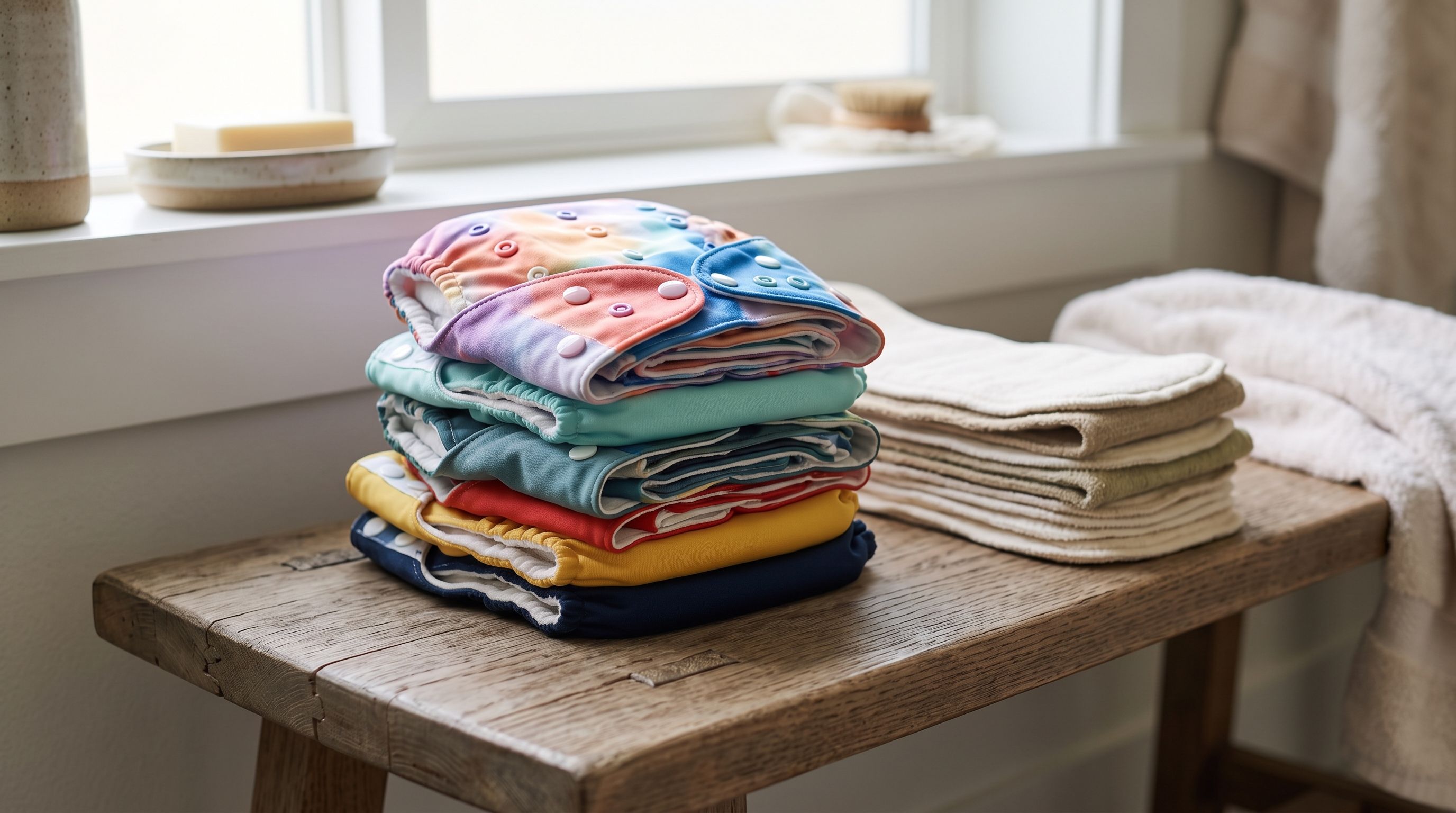
Forget what you might picture when you think of traditional cloth diapering—the days of safety pins, rubber pants, and awkward flat rectangles are long gone. Modern cloth diapers feature adjustable snap systems, leak-proof leg gussets, and high-performance natural fiber inserts like organic cotton, hemp, and bamboo.
When you start researching cloth options, the variety can feel overwhelming. Here is a quick breakdown of the main styles you'll encounter:
1. All-In-Ones (AIOs)
The fabric liner and waterproof outer shell are sewn together into a single piece. They are the closest match to a disposable diaper in terms of convenience, but they take longer to dry on the line or in the dryer.
2. Pocket Diapers
These feature a waterproof outer shell lined with a stay-dry fleece pocket. You stuff absorbent inserts (cotton, hemp, or microfiber) inside the pocket opening. They are easy to adjust for absorbency and dry quickly.
3. Covers + Inserts (Our Top Pick)
This system uses a waterproof outer cover (or shell) paired with separate absorbent lay-in inserts. We personally prefer a separate insert paired with a soft outer shell over an All-In-One system. If the cover isn't soiled when baby pees, you can simply swap out the wet insert for a fresh one and reuse the cover, drastically reducing the total laundry volume.
Overcoming the Learning Curve
When I first started exploring cloth diapering, I remember feeling thoroughly confused. How do you get the right fit? What do all those different rows of snaps actually adjust? How do you establish a proper wash routine without ruining the elastic?
There are a million different opinions online, and many of them contradict each other. As with everything on the homestead, my best advice is to keep it simple, trust your intuition, and embrace a little trial and error.
Three Simple Rules for Success:
- Focus on Natural Fibers: Choose inserts made from organic cotton or hemp. They absorb more liquid, hold up better over hundreds of wash cycles, and are gentler on sensitive baby skin.
- Keep the Wash Routine Simple: You don't need fancy, expensive specialty detergents. A warm rinse cycle, followed by a heavy hot wash with a clean, additive-free detergent, and a line dry in the sun (which naturally bleaches stains!) is all you need.
- Start Small: Buy a small stash of 10 to 12 diapers first to test which fit and style aligns best with your baby's body shape and your daily rhythm before investing in a full setup.
Claiming Sovereignty Over Your Nursery
Cloth diapering isn't about achieving perfection—it's about reclaiming autonomy over your budget, reducing household chemical exposure, and stepping away from single-use consumerism.
By keeping your system simple, you turn what modern culture views as a heavy financial chore into a clean, cost-effective, and deeply rewarding homestead rhythm.
The Ancient Rhythm of EC: Why We Cloth Diaper and Do Elimination Communication
Explore our full philosophy and infant pottying guideTending the Hearth Together
Join our community of scratch home cooks and intentional parents. Receive our latest guides, real-food recipes, and ancestral reflections.
Respecting your sanctuary. Sent with zero fluff.